4,025 frames
4,025 frames
A WebGL engine renders light in high dynamic range, stepped one frame at a time in headless Chromium. The film was rendered in 17 pieces, side by side.
A white dwarf the size of Earth steals from a red giant until the stolen fuel ignites. 2 min 48 s, every frame rendered in code.
Headphones on? Binaural puts the sound around you.
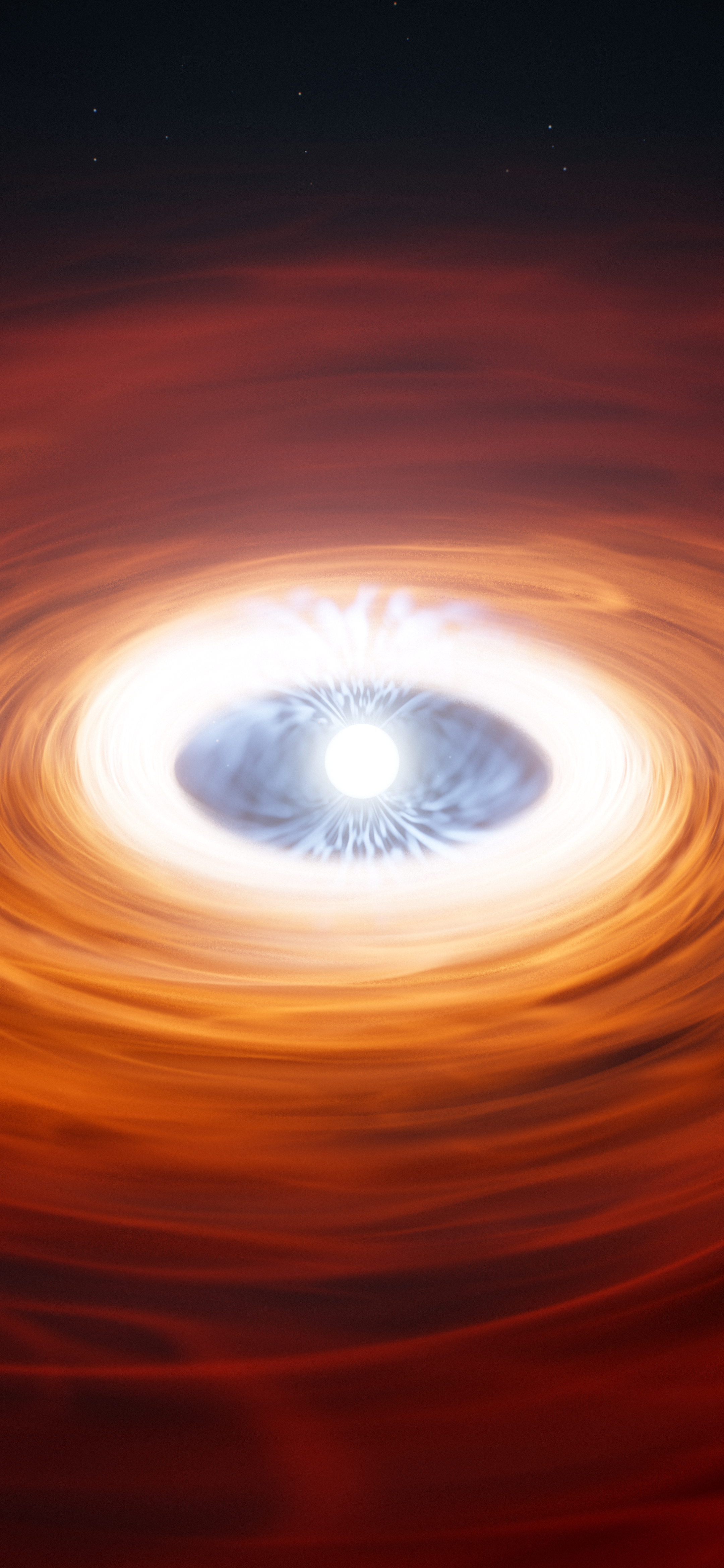
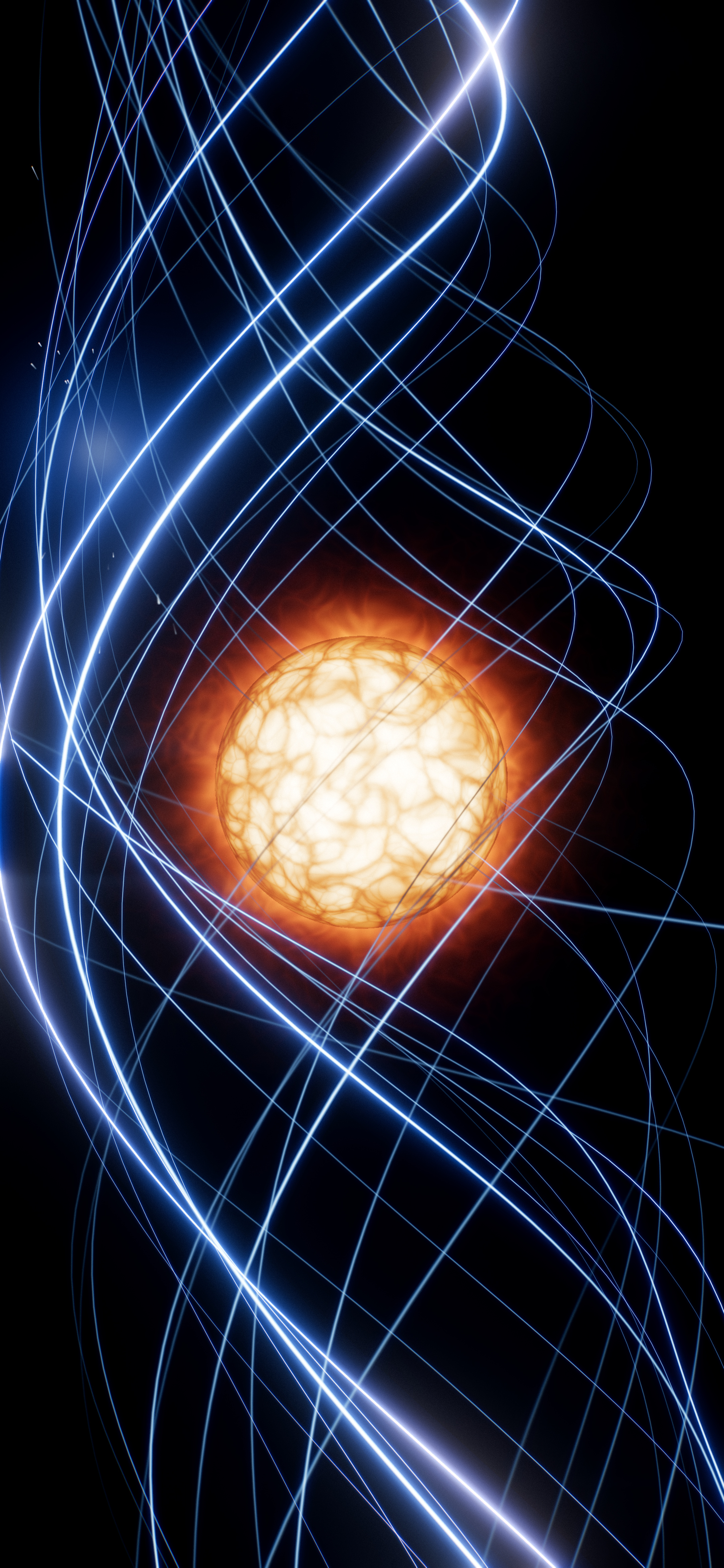
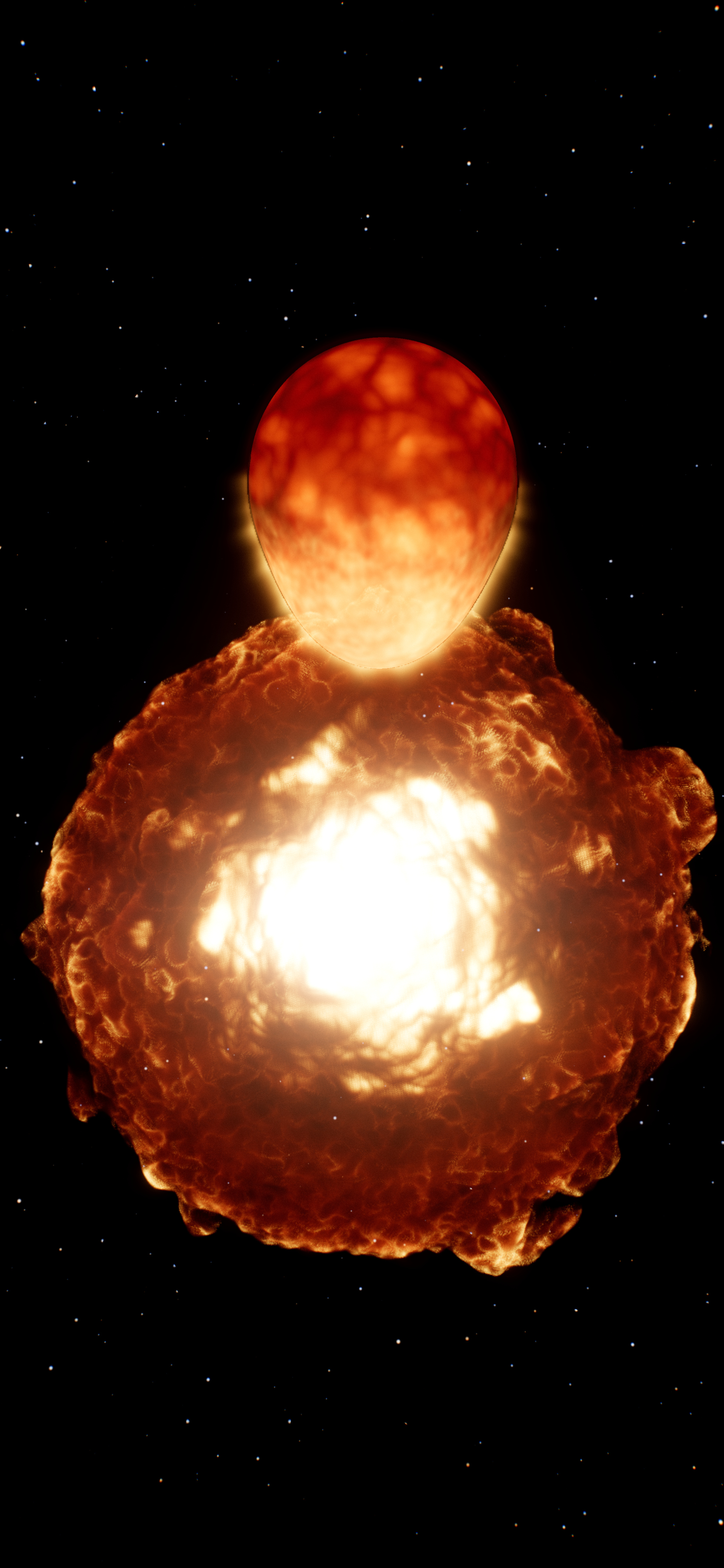
Two stars circle each other in the dark. Goliath is a red giant, a boiling mass of crimson gas with convection cells the size of suns. David is a white dwarf: no bigger than Earth, far denser, a cold blue-white point.
The giant has swollen until its outer layers reach the balance point between the two. Past it, the dwarf's gravity wins. Gas tears loose in a stream of fire and curves across the gap.
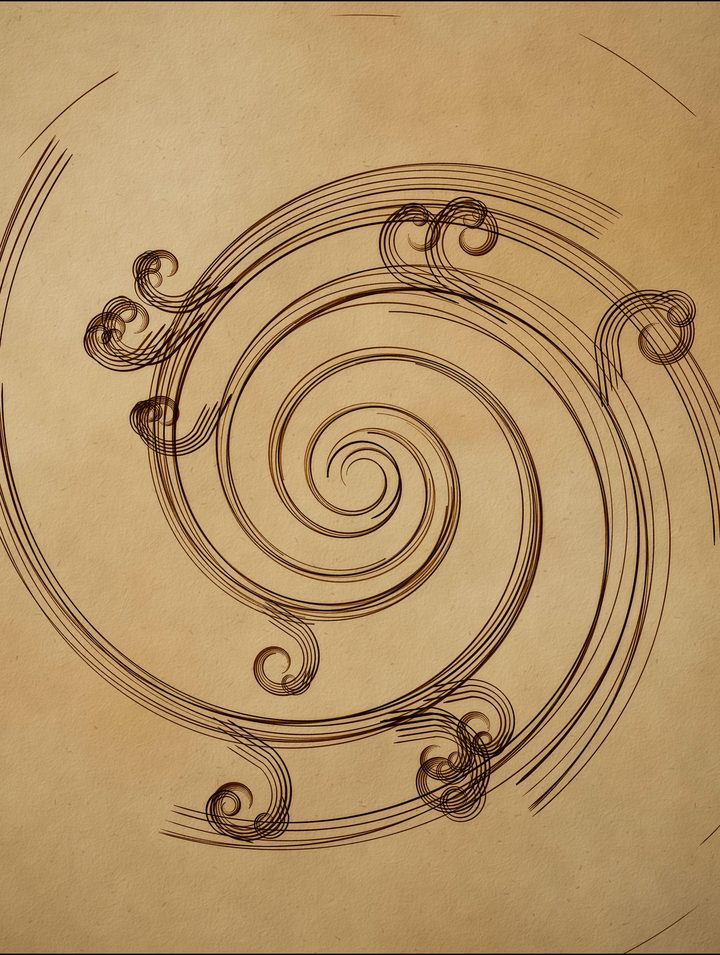
It spirals into a vortex around the dwarf and settles on its surface as an ocean of hydrogen, packed hotter and tighter with every turn.
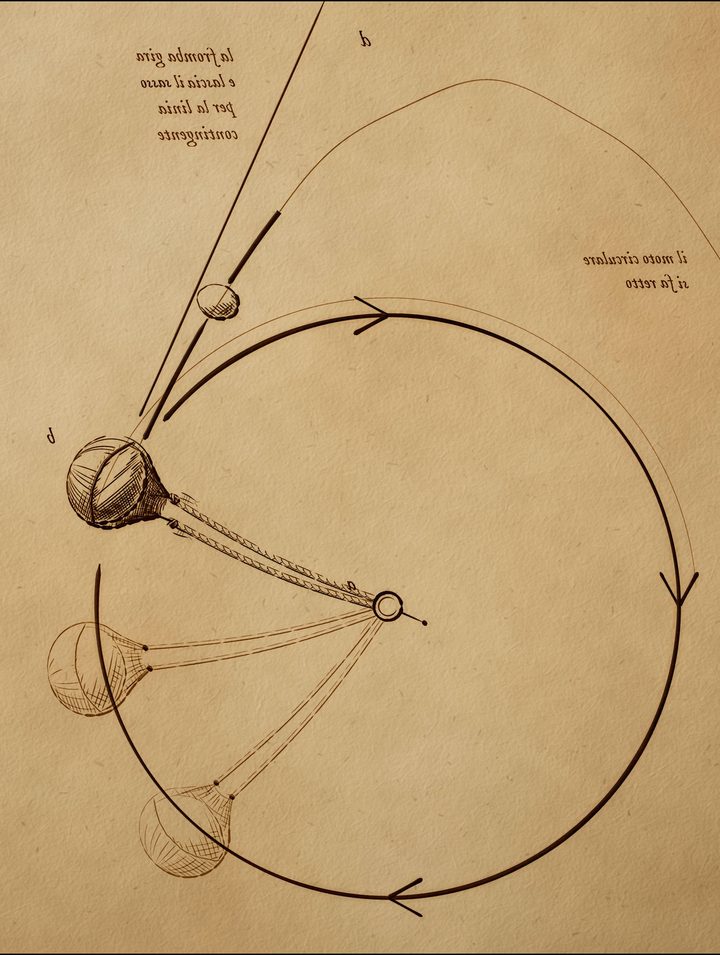
Five strikes land in the orchestra. Each one takes light from the picture, until the whole image is drawn inward to a single point.
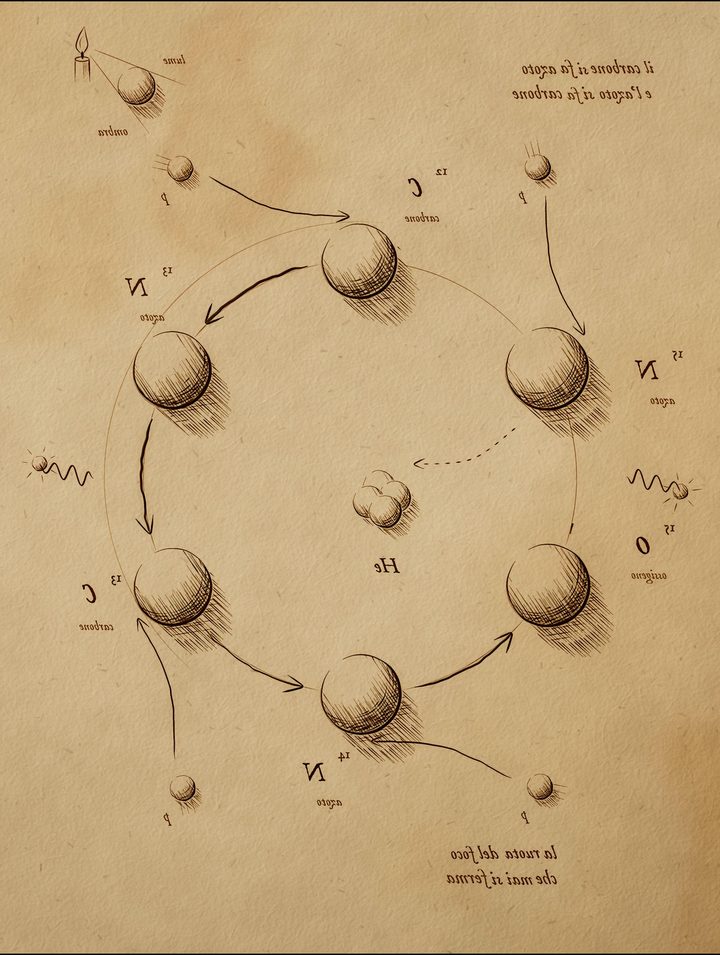
Then the ocean ignites, and you see nothing. The screen is black and the climax is a sound. When the eruption breaks out of the dark, the explosion lands on that frame and Vivaldi's closing tutti returns under cannon salvos.
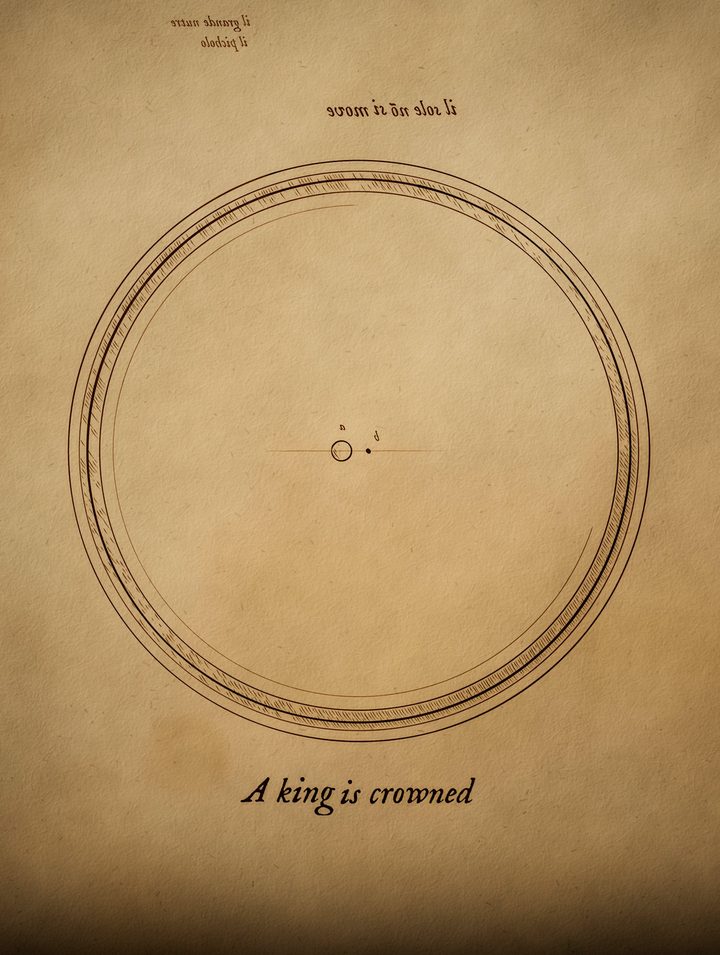
The shell fractures into gold. The giant is left scarred, undone by its own substance. The small core endures, as the white dwarf of a real nova does. A king is crowned.
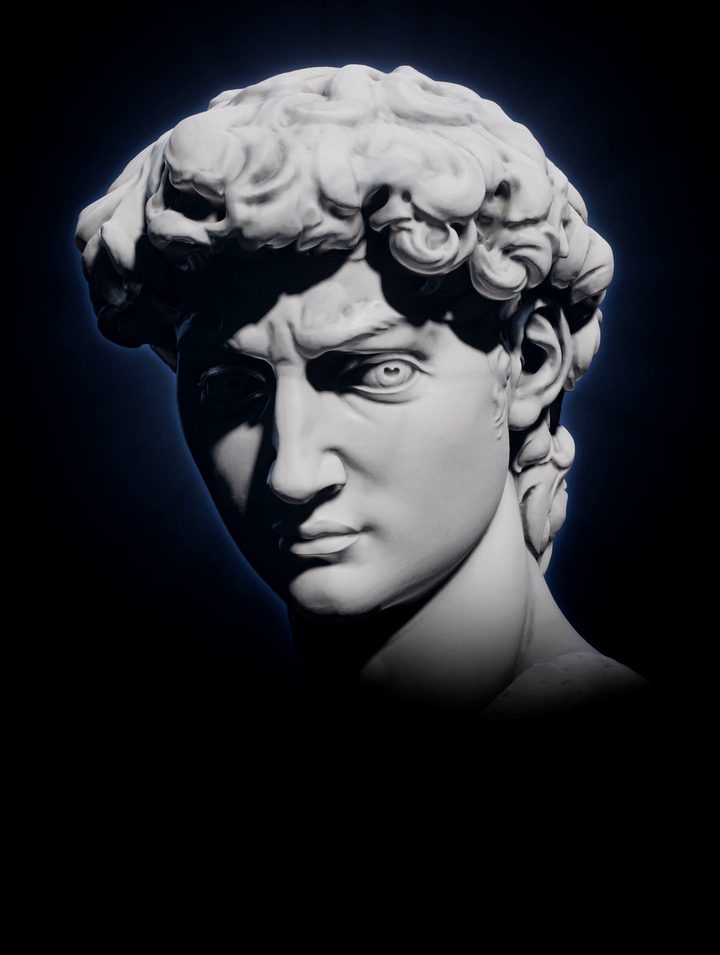
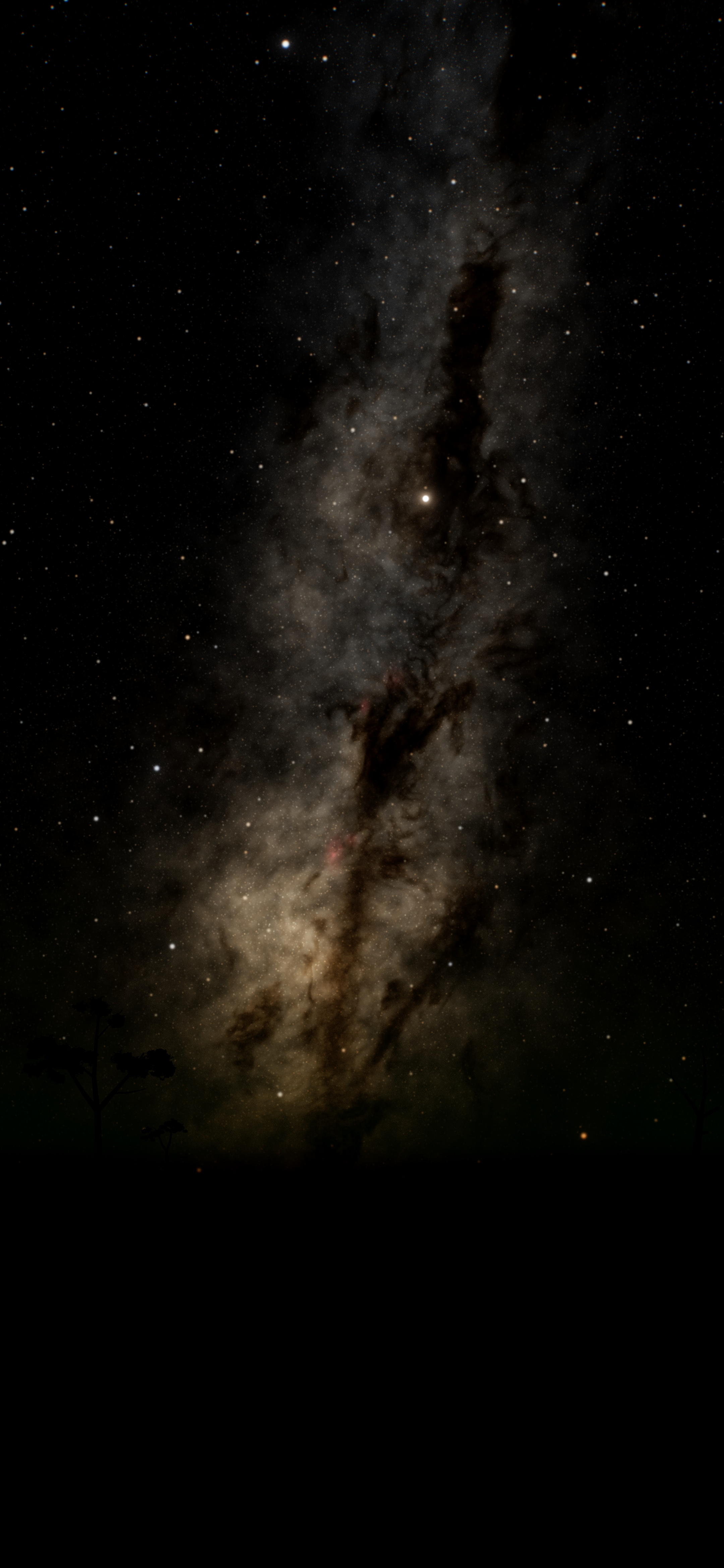
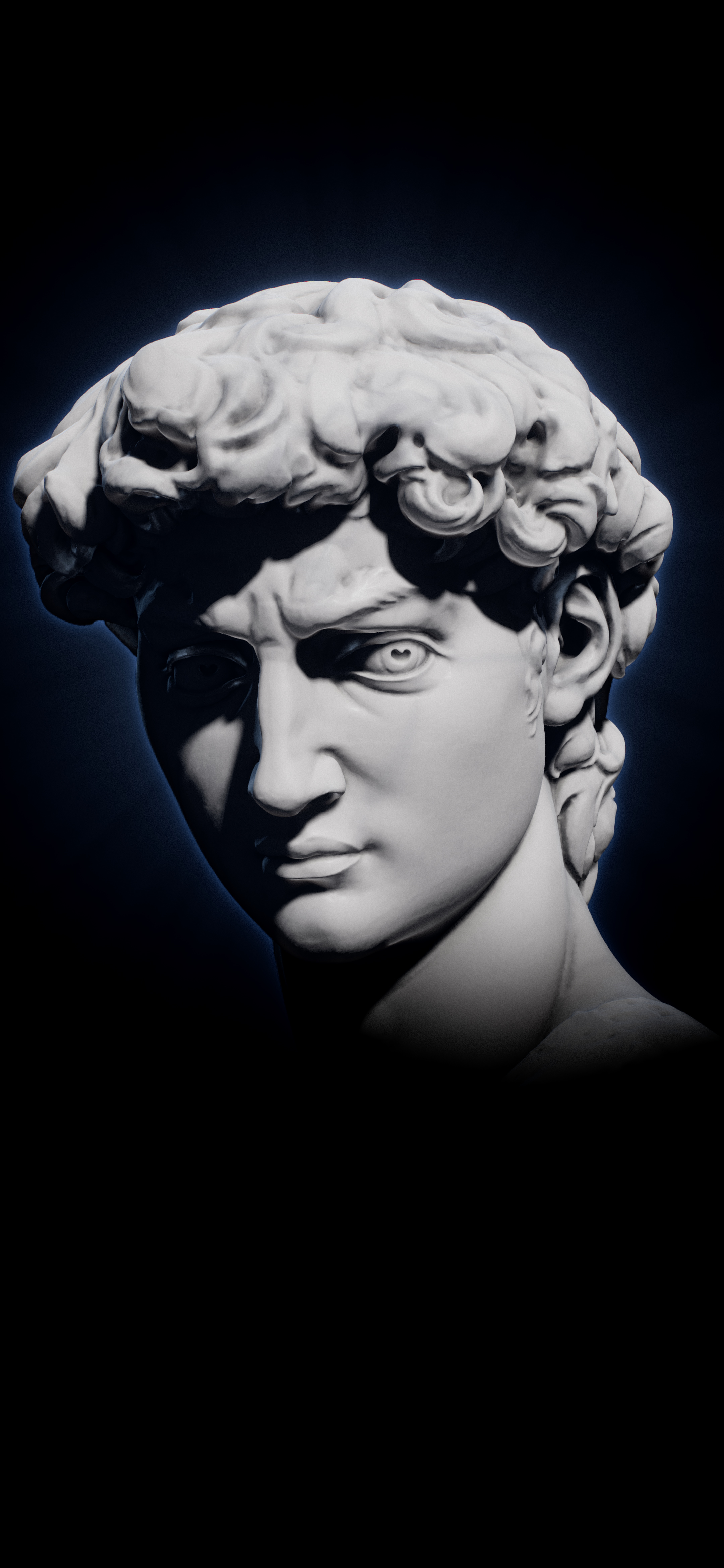
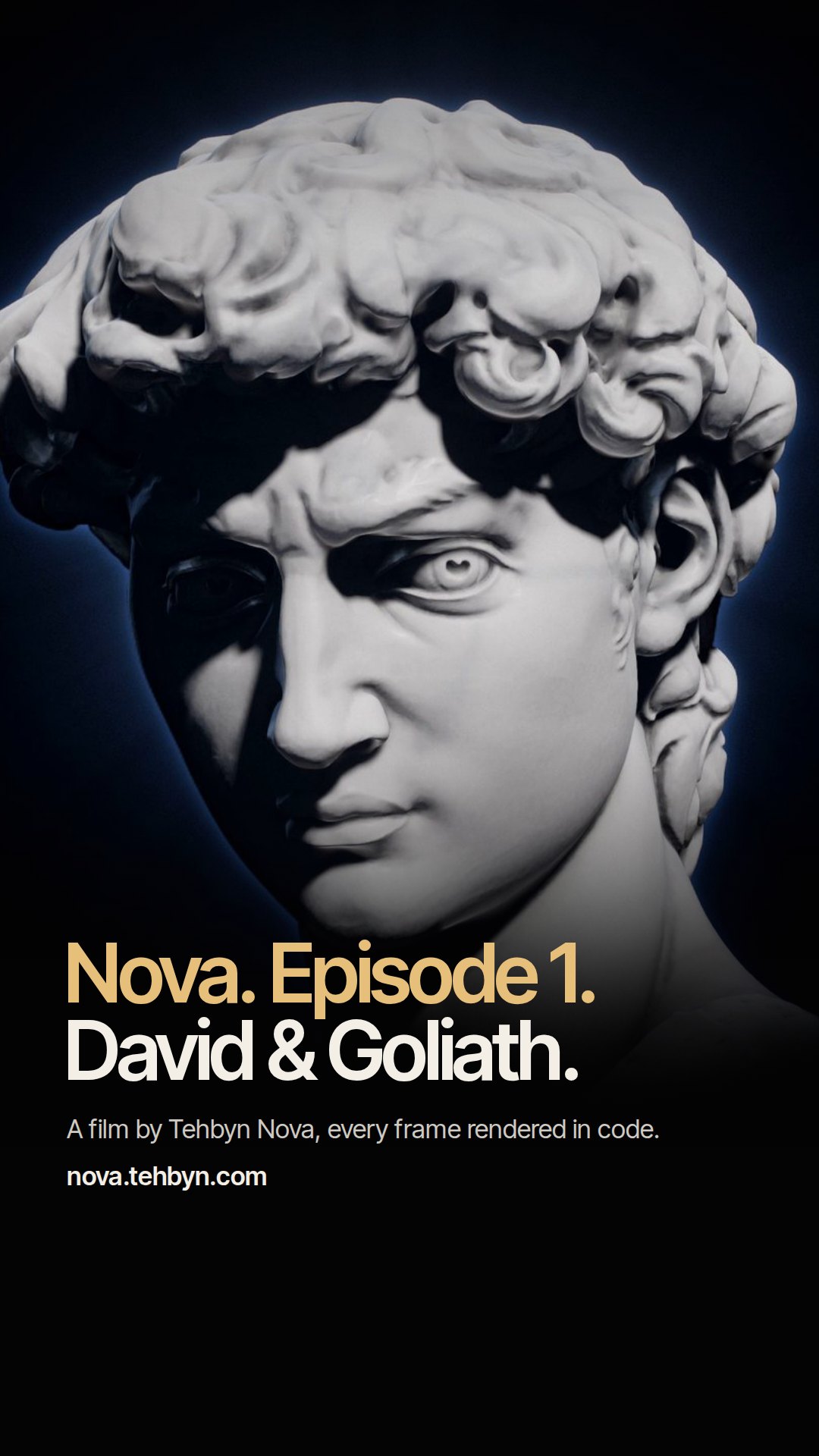
From a dark-sky Earth, a point of light appears where there was none. And the marble David, who has been turning toward the lens all film, looks straight at you.
Episode 1 of Nova. 2 min 48 s, vertical.
Watch the filmObservers saw a star where none had been and called it new, though what they were seeing was an explosion. The series keeps both readings: destruction that is also a birth, and a survivor that can erupt again.
Nova retells old stories as events that really happen in the sky. Here the shepherd and the giant become a white dwarf and a red giant, because the physics fits the myth: the small, dense and determined against the immense.
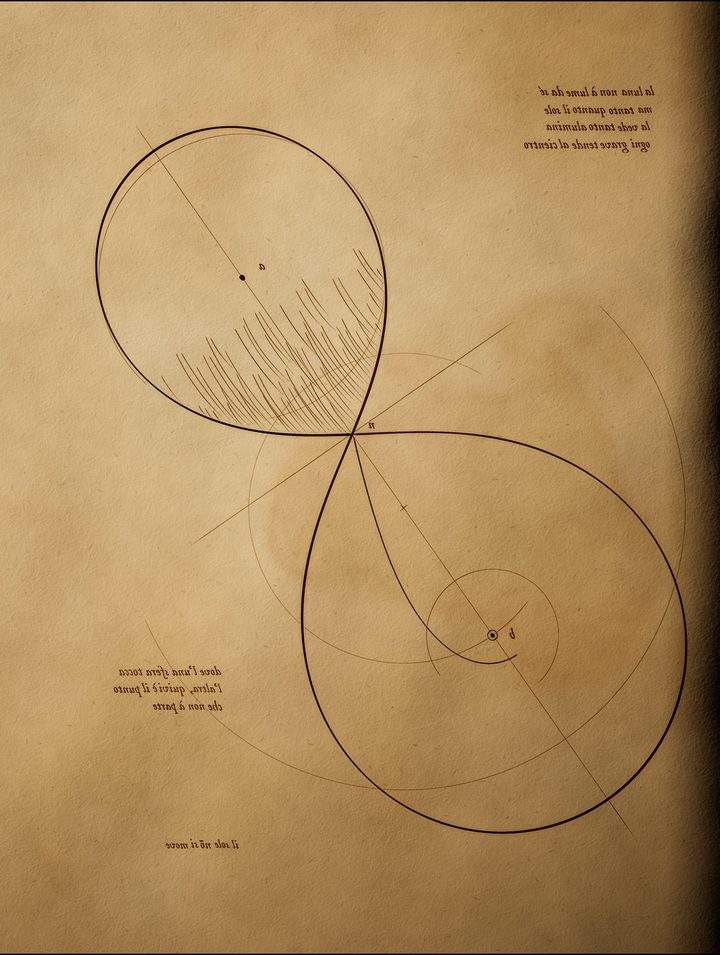
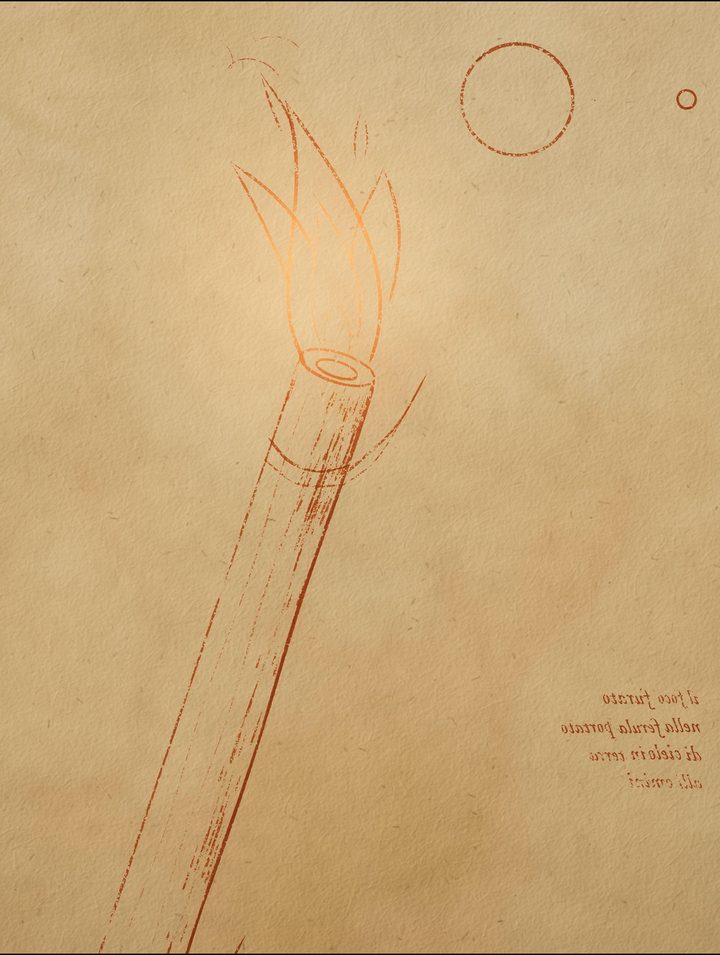
Between the stars are the notebooks, iron-gall ink and red chalk in mirror script, drawn in the manner of Leonardo. They stand for the oldest part of the story: people trying to draw what they could not reach.
This is Episode 1.
A WebGL engine renders light in high dynamic range, stepped one frame at a time in headless Chromium. The film was rendered in 17 pieces, side by side.
The marble David turns toward the lens across the whole film, so slowly that each glimpse looks still. The head is a public-domain scan of a plaster cast.
Vivaldi's Winter, cannon fire from the 1812 Overture and a synthesised sound design, placed to the frame and mixed offline.
The film ends on a signature written left to right, the way the film's last three seconds draw it.